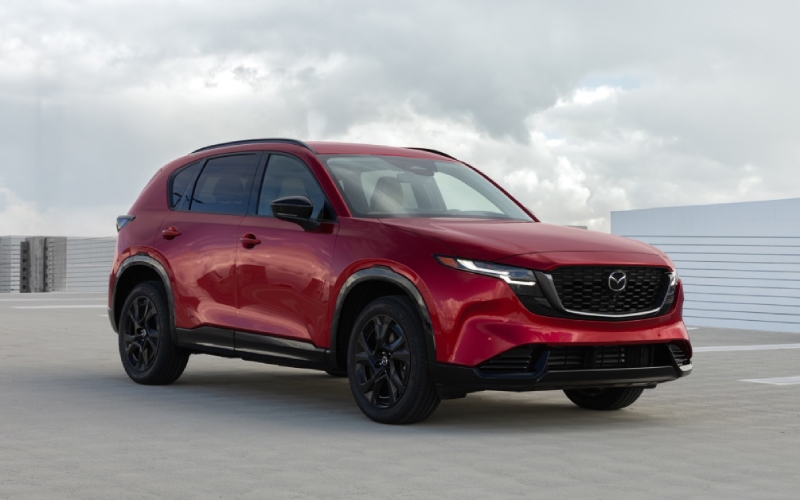
Roger Beasley Mazda Leander - Which SUV Has the Best In-Car Tech for Llano, TX Drivers: 2026 Mazda CX-5 vs 2026 Subaru Forester?
When local shoppers ask us which compact SUV delivers the most intuitive, future-forward cabin technology, the conversation quickly turns to how these two approach infotainment. One side prioritizes tight Google integration with a large, easy-to-use interface; the other offers a solid, familiar menu system with smartphone mirroring. That’s why we built this guide to help Llano, TX drivers understand the real-world differences between the 2026 Mazda CX-5 and the 2026 Subaru Forester, so you can decide which setup will make your daily routine simpler and your weekend drives more enjoyable.
Cabin tech that fits your digital life
The headline for the all-new CX-5 is its available 15.6-inch integrated touchscreen, the largest display ever in a Mazda, with Google built-in. That means native Google Maps right in the dash, access to the Google Play Store for a curated set of in-vehicle apps, and natural-feeling voice interaction designed to handle complex, follow-up questions without memorizing commands. You can pull up directions to a new restaurant, add a coffee stop, and adjust climate with voice prompts that feel conversational. Forester counters with an available 11.6-inch high-resolution touchscreen, wireless Apple CarPlay® and Android Auto™ on most trims, and a straightforward menu layout. It’s capable and user-friendly, but lacks native Google integration, so you’re relying on your phone for those services rather than the vehicle’s embedded system.
Why a bigger, native system matters on the road
Larger, native systems reduce the friction points that add stress behind the wheel. With the CX-5’s available 15.6-inch display, you get more readable maps, easier-to-hit touch targets, and less time eyes-off-road when glancing at guidance or toggling a function. Native Google Maps stays current with points of interest and real-time routing even when you opt to leave your phone in your bag. Forester’s system is clean and logical, and wireless smartphone mirroring is convenient, but the experience depends on your phone’s connection and app behaviors. If you prize a cohesive, built-in experience, the CX-5 takes the edge here.
Voice assistance and everyday convenience
Natural voice interaction is another area where the CX-5 differentiates itself. With Google built-in, you can ask for directions, make nuanced follow-up adjustments, and access supported apps in a way that mirrors your daily digital life. It’s not just about answering a question; it’s about how easily you can steer the conversation. Forester offers voice commands as well, especially through smartphone integration, but commands typically require more deliberate phrasing and depend on app-side voice assistants. For drivers who want a car that adapts to them, native Google integration in the Mazda makes the routine things smarter and faster.
Driving feel and day-to-day refinement
Tech aside, how these SUVs feel in motion matters. CX-5 pairs its 2.5-liter SkyActiv-G with a traditional 6-speed automatic and standard i-Activ AWD, tuned for a composed, quiet ride that takes the edge off longer commutes and rougher surfaces. Forester brings a 2.5-liter SUBARU BOXER® engine with a Lineartronic® CVT and standard Symmetrical All-Wheel Drive for year-round traction. Subaru’s available dual-function X-MODE® enhances grip in challenging conditions. Both are capable; Mazda’s approach skews more refined in noise and shift quality, which many technophiles also appreciate because a quieter cabin makes voice control and audio more usable at speed.
Safety and driver assistance
Active safety is strong in both. Forester makes EyeSight® Driver Assist Technology standard and layers in available 360-degree Surround-View Monitor, Blind-Spot Detection with Rear Cross-Traffic Alert, and Reverse Automatic Braking on select trims. The new CX-5 continues Mazda’s record of robust safety engineering and introduces several new ADAS features aimed at awareness and protection, building on a legacy of top safety recognitions. For families who want a calm, predictable experience, both SUVs deliver meaningful assistance, and the CX-5’s quiet cabin and clear interface support safer, less-distracted decision-making.
Space, comfort, and cabin experience
The CX-5’s larger footprint translates into easier entry and exit thanks to widened door openings, added rear leg, knee, and headroom, and a longer, taller cargo area with a lower lift-in height that’s kinder to backs and shoulders. Forester remains a standout for visibility and configurability, including an available hands-free Power Rear Gate and a generous, flat load floor. If you often juggle car seats or taller cargo, the Mazda’s packaging updates are felt the first time you load up for a weekend in the Hill Country.
Quick comparison highlights
- Display size and clarity: CX-5 offers an available 15.6-inch touchscreen; Forester’s max is 11.6 inches.
- Native services: CX-5 includes Google built-in with Google Maps and Google Play integration; Forester relies on Apple CarPlay® and Android Auto™.
- Voice interaction: CX-5’s native system handles more natural, follow-up prompts; Forester’s voice functions typically route through your phone.
- Ride and noise: CX-5 emphasizes a quieter, more composed drive; Forester emphasizes traction versatility and visibility.
Ultimately, if you want your SUV to feel like a seamless part of your digital life right out of the box, the CX-5’s native integration and large display make it the more tech-forward choice.
Frequently Asked Questions:
Does the 2026 Mazda CX-5 require a smartphone for navigation?
No. With Google built-in, the CX-5 offers native Google Maps navigation on the available 15.6-inch display, so you can route, save places, and explore without mirroring your phone.
Can the 2026 Subaru Forester run my favorite apps without plugging in a phone?
Forester supports wireless Apple CarPlay® and Android Auto™, so many apps work wirelessly through your phone. It does not have native Google built-in or Google Play app downloads.
Is all-wheel drive standard on both models?
Yes. CX-5 features standard i-Activ AWD, and Forester uses standard Symmetrical All-Wheel Drive. Both systems enhance traction year-round.
If you’re comparing these two and want hands-on time with the CX-5’s larger screen and native Google functions, stop by for a tech-focused test drive. Roger Beasley Mazda Leander is proudly serving Burnet, Lampasas, and Llano, and our team will help you pair the right features with the way you live and drive.