Roger Beasley Mazda Leander - Which Hybrid SUV Handles Hill Country Backroads Better for Llano, TX Drivers—Mazda CX-50 Hybrid or Hyundai TUCSON Hybrid?
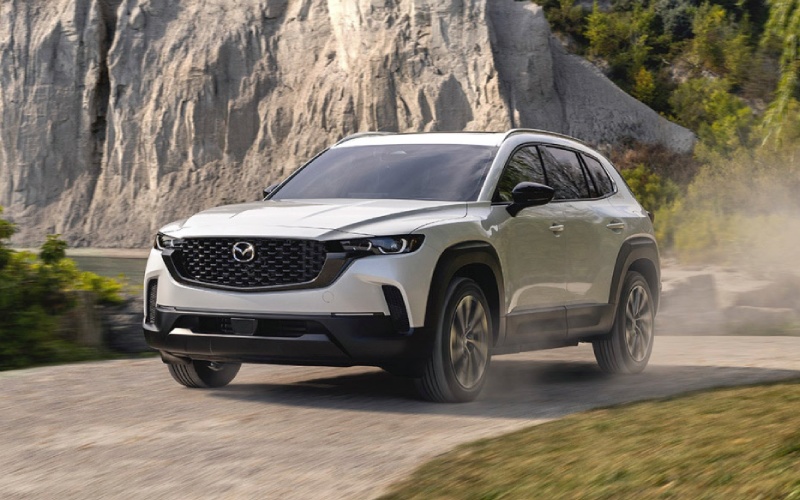
Drivers in the Texas Hill Country often ask a simple question that has a lot riding on it: which hybrid SUV feels more confident and composed when pavement turns patchy or the route winds—Mazda CX-50 Hybrid or Hyundai TUCSON Hybrid? This deep dive looks at how each model’s AWD, chassis tuning, and driver-assistance tech come together on the kinds of roads you tackle daily, from smooth stretches to uneven county lanes around Llano, TX.
What do “confidence” and “control” really mean on backroads?
On paper, both hybrids come well-armed: the Mazda CX-50 Hybrid brings standard Electronic All-Wheel Drive, a meticulously tuned hybrid system with an e-CVT, and Mi-Drive with selectable Power and Trail modes. Hyundai TUCSON Hybrid delivers standard HTRAC AWD and e-Handling technology with smart torque distribution. Confidence is how intuitively and consistently these systems respond when conditions change—like bouncing from fresh asphalt to a patched uphill sweeper or a gravel-strewn shoulder—without causing a lurch or an unexpected shift in traction.
In practice, the Mazda’s calibration shines through the steering wheel and seat. Throttle inputs translate predictably, and the hybrid system settles into a quiet, steady rhythm on rolling terrain. The Hyundai counters with reassuring grip, particularly at lower speeds where its system can shift torque decisively. But over a full day of mixed surfaces, the Mazda’s smoother, more linear responses often feel calmer and more precise.
AWD systems and drive modes—how do they differ?
Mazda’s e-AWD feels like an organic extension of the chassis. With Mi-Drive’s Power and Trail modes, you can tailor responses to suit your path—Power for brisk freeway merges or uphill passes, Trail to help maintain traction and control on well-maintained dirt access roads. The e-CVT helps the engine stay in its most effective range, so acceleration builds progressively and predictably.
Hyundai’s HTRAC AWD is standard and confidence-inspiring, supported by e-Handling that pairs traction control with the electric motor to enhance corner stability. It’s especially good at finding grip and keeping you moving when the road surface has variable traction. Where it can feel different is the transmission behavior; the traditional automatic shifts are decisive, while the Mazda’s e-CVT delivers seamless, uninterrupted power.
Cabin calm and visibility matter more than you think
Driver confidence is also about what you see and how settled the cabin feels. The Mazda’s available Active Driving Display keeps key info in your line of sight, reducing glances away from the road, while standard Alexa Built-in lets you make adjustments without fuss. The standard Panoramic Moonroof brightens the cabin, reducing fatigue during long days. The TUCSON Hybrid’s standard 12.3-inch touchscreen is crisp and expansive, and Bluelink+ enables robust remote features. Its available Surround View Monitor also helps when you’re easing around tight trailhead parking or narrow streets.
Still, when surfaces get choppy, the Mazda’s composure and noise control can reduce the mental load of driving. That—combined with clear sightlines and supportive seating—adds up to more than comfort; it becomes a performance advantage on demanding routes.
Safety tech that supports—not distracts
Both models bring modern driver-assistance suites to the table. Mazda’s i-Activsense® offers alerts and active aids such as Blind Spot Monitoring, Lane Departure Warning, and Rear Cross Traffic Alert. Hyundai SmartSense includes Forward Collision-Avoidance Assist, Lane Keeping Assist, and more advanced features like Blind-Spot View Monitor and Surround View Monitor on Limited trims. Recognition underscores the point: Mazda counts multiple IIHS TOP SAFETY PICK+ awards across its lineup, including for the CX-50 Hybrid, while the 2026 TUCSON Hybrid earned a 5-Star Overall Safety Rating from NHTSA.
From a driver’s standpoint, the detail that often seals the deal is how naturally these systems communicate. The Mazda’s alerts are well-tuned and informative without feeling intrusive, which helps you stay engaged with the road without added stress.
Everyday usability and Hill Country livability
Beyond chassis and safety, the details matter. The Mazda’s available ventilated front seats help cool you down after a hike, while the available heated rear seats keep passengers content on cool mornings. Meanwhile, Hyundai’s available Remote Smart Parking Assist is handy in tight spaces, and its panoramic curved display adds a tech-forward vibe. If you’re balancing commutes, school runs, and weekend treks, both SUVs can do it all—but the Mazda tends to make each task feel a touch more refined and cohesive.
At the end of the day, your decision may come down to what kind of feel you prefer: the Mazda’s smooth, linear hybrid pairing and intuitive e-AWD, or the Hyundai’s assertive torque distribution and feature-rich tech stack. If seamless power, settled handling, and elegant ergonomics top your list, the Mazda CX-50 Hybrid deserves the first drive.
Key considerations for Llano-area shoppers
- Road character: Expect a mix of smooth and uneven surfaces; favor hybrids that keep responses linear and predictable.
- Visibility and focus: Features like a Head-Up Display and well-tuned alerts reduce distraction on winding routes.
- Cabin comfort: Ventilated seats, thoughtful ergonomics, and cabin quietness help on longer Hill Country days.
For a hands-on comparison drive, reach out to Roger Beasley Mazda Leander—our team can help you evaluate these differences on the routes you drive most.
Frequently Asked Questions:
Does the Mazda CX-50 Hybrid have a true off-road mode?
The Mazda CX-50 Hybrid includes Mi-Drive with selectable Power and Trail modes. Trail mode helps optimize traction and control on well-maintained dirt or gravel access roads, making it a great fit for light adventure use in Hill Country settings.
How do the AWD systems feel different in everyday driving?
Mazda’s e-AWD emphasizes smooth, linear responses that feel closely integrated with steering and throttle inputs, while Hyundai’s HTRAC AWD adds a decisive, torque-forward character. Both provide confident traction; the Mazda simply focuses more on calm, predictable transitions.
Which is quieter on rougher pavement?
Perceived cabin quietness can vary by road surface and tire choice, but many drivers note the Mazda’s hybrid calibration and overall noise control contribute to a more settled, relaxed experience on patchy or coarse asphalt.
Our team is serving Burnet, Lampasas, and Llano with tailored test routes to help you feel these differences for yourself. If your shortlist includes both models, compare them back-to-back over the kinds of roads you drive every week, from smoother stretches to the curvier, elevation-changing routes that define the Hill Country.